When the sun rises on Eid al-Adha, the Festival of Sacrifice, it does more than illuminate mosques and homes. It lights up hearts across cities, villages, deserts, and coasts, calling millions of Muslims to reflect, gather, and celebrate one of the holiest days in the Islamic calendar.
Known as Eid al-Adha, Illeya, Kurban Bayramı, or simply Big Sallah in different parts of the world, the festival honors the unwavering faith of Prophet Ibrahim (Abraham) and the divine mercy that replaced his son with a ram for sacrifice. But beyond its religious roots, Eid al-Adha is a deeply personal and communal celebration that manifests uniquely across regions shaped by culture, tradition, geography, and family ties.
Let’s take a heartwarming tour around the world to see how Muslims celebrate this sacred day in beautiful, diverse ways.
Nigeria: Illeya, Feasting, and the Drumbeat of Community
In Nigeria, particularly among the Yoruba, it’s called Illeya (loosely translated as “homecoming”). Families travel across states to reunite, mosques overflow for early morning prayers, and the air fills with the scent of grilled ram meat, jollof rice, and stews.
Rams are a status symbol during Illeya and many households prepare for months to purchase one. After the sacrifice, meat is shared in three parts: one for family, one for friends, and one for the needy. But it’s not just about meat. Illeya in Nigeria is about culture: agbada-wearing men, gèlè-styled women, masquerades in certain towns, and kids collecting money with chants of “Eid Mubarak!” (Eid Mubarak means “Blessed Festival”, a common greeting exchanged during Muslim holidays).
Saudi Arabia: A Spiritual Centerpiece
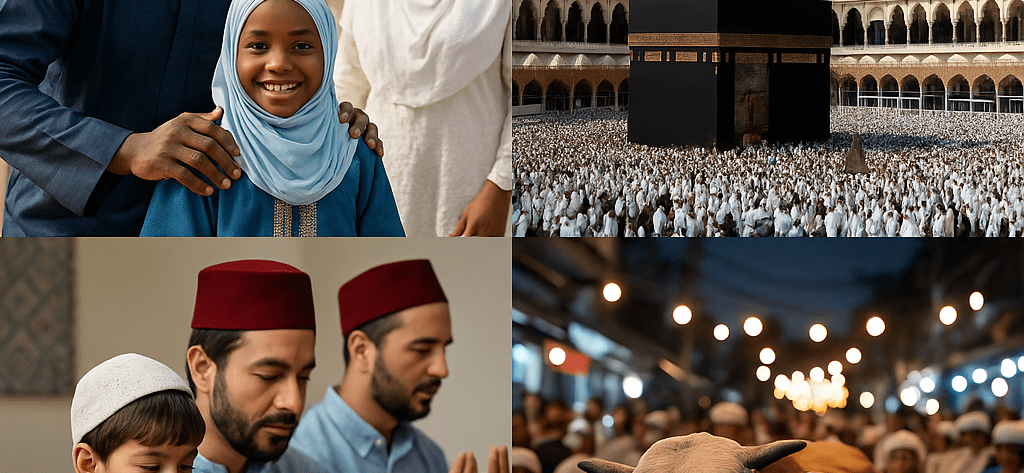
As the birthplace of Islam, Saudi Arabia holds special significance during Eid al-Adha. Millions of Muslims perform Hajj in Makkah during this period. Hajj is the annual Islamic pilgrimage and one of the five pillars of Islam, mandatory once in a lifetime for all Muslims who are physically and financially able.
The Eid sacrifice happens immediately after the Day of Arafat (the second day of Hajj, when pilgrims stand in prayer on the plain of Arafat, seeking forgiveness and reflecting spiritually).
For those not on pilgrimage, the day begins with Eid prayers in grand mosques, followed by the ritual sacrifice (Qurbani). The meat is mostly donated to the poor, sometimes through government or global distribution efforts. The celebration here is modest but deeply spiritual, centered on reflection, charity, and gratitude.
Turkey: Kurban Bayrami and Visiting the Elders
In Turkey, it’s called Kurban Bayrami (literally “Festival of the Sacrifice”). The day begins with a strong emphasis on family; visiting grandparents, exchanging sweets, and giving children Bayramlik (holiday gifts or money).
Traditional Turkish dishes like kavurma (fried meat), dolma (stuffed vegetables), and baklava (sweet pastry) make their way to tables, and many communities donate meat to hospitals, orphanages, and refugee centers. Hospitality is at the heart of the celebration.
Indonesia: Takbir, Togetherness, and Street Spirit
As the largest Muslim-majority country in the world, Indonesia celebrates Eid al-Adha with striking vibrancy. Takbir (chants of praise glorifying God) begin the night before, echoing through neighborhoods and over speakers.
After morning prayers, animals like goats and cows are sacrificed in local mosques or designated community spaces. Volunteers handle meat distribution to the needy. The atmosphere is social: neighbors visit each other, and streets buzz with festive energy, traditional snacks, and joy.
Pakistan: Qurbani, Style, and Sweet Surprises
In Pakistan, Eid al-Adha is both sacred and festive. Many families begin with a fresh outfit, often brightly colored shalwar kameez (a traditional tunic and trousers), and head to the mosque for Eid salah (prayer). The sacrifice is often performed in the home or a nearby lot, with butchers in high demand during this time.
Families then divide the meat into shares and distribute it generously. Sweets like sheer khurma (a creamy dessert made with dates and milk) and gulab jamun (milk-solid based sweet balls) are served, and visits to friends and relatives continue throughout the day.
The UK, US & Diaspora Communities: Unity in Diversity
For Muslims in the West, Eid al-Adha is about making space for celebration amidst work, school, and multicultural life. Communities gather for outdoor prayers in parks and sports fields, often followed by halal barbecues, cultural fairs, and family lunches.
In places like London, New York, and Toronto, you’ll find a beautiful mosaic of traditions: Somali families, Bangladeshi aunties, Nigerian uncles, and Arab cousins all joining hands in a celebration that bridges continents and generations.
One Celebration, Many Cultures
While the rituals remain grounded in the same spiritual roots: prayer, sacrifice, charity, and community, the way Eid al-Adha is celebrated is a powerful reflection of culture, creativity, and connection.
From Illeya in Ibadan to Kurban Bayrami in Istanbul, Muslims everywhere embody the values of devotion, generosity, and unity. And perhaps that’s the most beautiful part of it all, that this celebration, though different in language, flavor, and fashion, carries the same heartbeat across the globe.
Eid Mubarak from CTDA Media!
Wherever you are, however you celebrate, may your Eid be filled with peace, purpose, and love.
Tell us your traditions, favorite meals, or unique experiences in the comment section.