We live in a world that’s quick to judge but slow to understand.
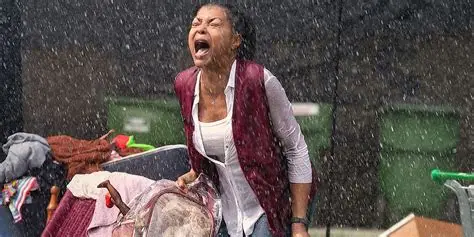
When Tyler Perry’s Straw first begins, it feels like just another intense drama. But as the minutes pass and the story of Janiyah unravels, we’re forced to confront something uncomfortable: the silent suffering of everyday people and the devastating consequences of being unseen for too long.
Janiyah’s story is not an isolated case. She could be anyone; the woman in line beside you at the bank, the nurse who’s always calm, the colleague who never complains. On the outside, she’s composed. On the inside, she’s one bad day away from snapping. And when she finally does, the world suddenly pays attention.
But why does it, sometimes, take the last straw for people to be seen?
1. We Punish Pain Without Caring About the Cause
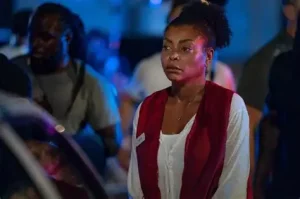
Janiyah didn’t plan to become “the woman who pulled a gun.” Life cornered her. But society, and the law, doesn’t care about context. It doesn’t ask, “What pushed her this far?” It only asks, “What did she do?”
In Straw, we see how people are expected to carry unbearable weight, and still somehow find socially acceptable ways to cope. The law makes no room for emotional explosions. The system doesn’t care if you’re drowning, it only cares that you didn’t swim the “right” way.
It’s a painful reminder that, in many places, suffering is no excuse. You are inexcusable.
2. You’re Not Seen Until You Break
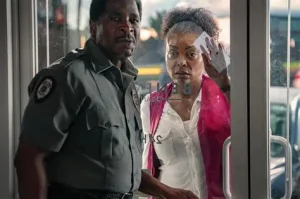
One of the most heartbreaking truths Straw reveals is that people only begin to pay attention when you’ve snapped. For Janiyah, her years of silent endurance didn’t matter. It was the explosion, not the exhaustion, that made headlines.
But isn’t that often the case?
We applaud strength in silence. We overlook the signs. And we only begin to empathize when someone does something drastic, something unthinkable.
Why must people bleed in public before we acknowledge their pain?
3. Empathy Is Rare, Judgment Is Easy
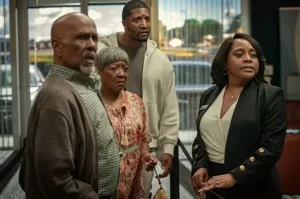
Even after the gun, the fear, the chaos, many still couldn’t empathize with Janiyah. She was labeled, judged, and condemned. But if we’re honest, how many of us would’ve reacted the same?
It’s easier to point fingers than to ask questions.
We often forget that people don’t “just snap.” There’s always a buildup, a history of being overlooked, disrespected, dismissed. Yet, instead of curiosity or compassion, society often meets desperation with scorn.
4. Someone Always Has It Worse But That Doesn’t Make Your Pain Less Real
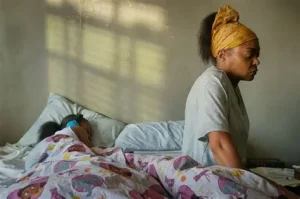
At one point, a diabetic woman at the bank reminds Janiyah that others are also going through worse. It’s true and humbling.
But it also raises a deeper point: comparison doesn’t heal. Yes, someone always has it worse. But that shouldn’t invalidate your reality.
Your suffering deserves space, too. Everybody’s pain is valid in its own measure.
5. The Healing Power of Community Especially Women

Despite everything, there were moments of beauty in Janiyah’s story. Nicole, Detective Raymond, and even the diabetic woman offered her more than sympathy, they offered understanding. They didn’t justify her actions, but they saw her as human first.
In a world quick to dehumanize, these women, and the police officers who treated her with care, became her lifeline. They reminded us of the power in women supporting women. Of what it means to choose grace over judgment.
Sometimes, healing starts with someone saying: “I see you.”
6. A Little Kindness Can Change Everything
So much could’ve changed if just one person, her boss, the rude officer, had chosen kindness over coldness.
What if her boss had asked, “Are you okay?”
What if the officer had seen a struggling woman instead of a threat?
Sometimes, a gentle word, a soft tone, or a simple act of empathy could be the difference between someone enduring and someone breaking.
7. Nobody Just Snaps, It’s Always a Build-Up

Janiyah’s breakdown wasn’t born in a moment. It was years of disappointment, exhaustion, being unheard, unseen, unprotected.
People carry things we’ll never understand. Pain builds in silence, behind smiles, underneath “I’m fine.”
By the time they snap, it’s not the beginning, it’s the aftermath.
8. Look Beyond the Act, See the Human
At the end of the day, Straw isn’t just a movie. It’s a mirror. It reflects our collective failure to listen, to care, to reach out when it matters most. It challenges us to stop looking at people’s actions in isolation and start asking, “What brought them here?”, not to justify their actions, but to truly understand why they did what they did.
It’s easy to wish punishment on someone who did something wrong. It takes maturity and compassion to look deeper, to see the human being behind the act.
Choose Grace
Tyler Perry’s Straw is more than a cautionary tale. It’s a call to action.
Let it remind us to look at people with softer eyes. To treat strangers with more care. To ask the hard questions before it’s too late. Because you never know who’s on the edge, one straw away from breaking.
Everyone is going through one thing or the other and it can be hard to care sometimes but maybe, just maybe, your kindness could be the one that keeps them together.
What You Can Do:
– Check in on the strong ones.
– Practice empathy even in tough conversations.
– Be kind, especially when it’s inconvenient.
– Choose grace. Always.
What’s one moment in your life when someone showed you unexpected kindness, or when you wish they had?
Share your story below. You never know who needs to hear it today.