Imagine losing a part of yourself, your hand, ear, or nose, and with it, a piece of your confidence. That void isn’t just physical; it tugs at your sense of identity and belonging. For many Africans and people of color, traditional prosthetics, most often designed for lighter skin tones, only amplify that loss, making them feel conspicuous, different, or incomplete.
Now imagine seeing a prosthetic so expertly crafted it blurs the line between real and fake: a silicone ear or hand molded with flawless veins, nails, and pigmentation that matches the wearer’s skin tone so precisely you can’t tell it’s not natural. This work isn’t just reconstruction, it’s restoration of confidence, dignity, and self-expression.
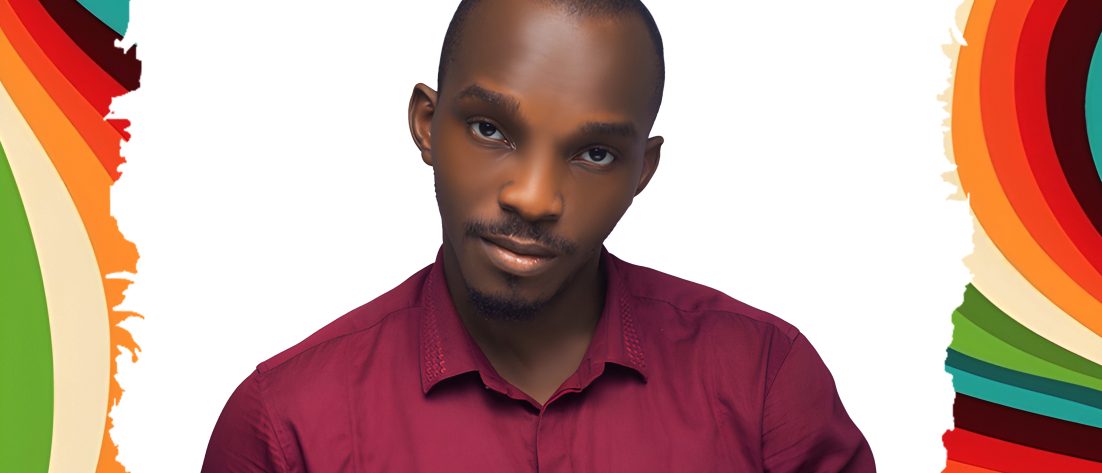
This is where we meet John Amanam, a master sculptor and former special-effects artist whose craft isn’t just impressive, it’s transformative. He meticulously handcrafts hyper-realistic prosthetics: ears, hands, fingers, toes, breasts, even legs, specially tailored for dark-skinned individuals, especially Africans. His artistry isn’t ornamental: it’s deeply human, born from empathy, ingenuity, and an unwavering commitment to representation.
Let’s pause and truly appreciate the intentionality behind his craft, the technical prowess, creativity, and compassion it takes to recreate a body part that feels like home again. That’s John Amanam’s mission.
Who is John Amanam?
Born and raised in Akwa Ibom State, Nigeria, John Amanam holds a degree in Fine and Industrial Arts from the University of Uyo. Before venturing into prosthetics, he worked in the Nollywood film industry, specializing in special effects and sculpture.
His career took a deeply personal turn in 2018 when a relative, his brother, lost fingers in an accident. The prosthetics available at the time didn’t match his skin tone, they were visibly off, often produced for lighter-skinned individuals. This sparked something in John. He realized there was a huge, underserved market: Africans who needed prosthetics that truly reflected their identity.
Determined to bridge the gap, he turned to his skills in sculpture and began a self-taught journey into prosthetic-making. He experimented with medical-grade silicone, studied anatomy, researched pigmentation, and perfected hyper-realistic detailing: veins, skin folds, nail beds, and wrinkles. His first successful piece was met with deep emotion by the recipient, whose voice “choked with emotion,” as reported in a Reuters interview.
The Craft: Art, Science, and Skin Tones
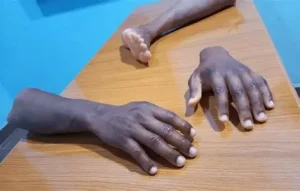
What makes Amanam’s work groundbreaking is the way he merges art and science to meet real human needs. He doesn’t mass-produce his prosthetics. Each piece is custom-built for the individual: hand-sculpted, color-matched, and designed down to the most intricate detail.
From fingers and ears to full limbs and facial prosthetics, the process involves:
– Molding the body part’s shape to match the wearer’s anatomy
– Mixing pigments to mirror their exact skin tone (including undertones and blemishes)
– Sculpting veins, nails, textures, and more by hand
– Fitting and adjustments to ensure maximum comfort and realism
Each prosthetic can take from three weeks to two months to complete, depending on the complexity. But for clients, it’s more than worth the wait.
Immortal Cosmetic Art: A Hub for Afrocentric Prosthetics
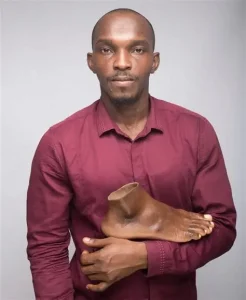
In 2021, John Amanam officially launched Immortal Cosmetic Art Ltd, a Nigeria-based company that offers affordable, life-like prosthetics for people with darker skin tones. His brand is the first of its kind in sub-Saharan Africa and has already served hundreds of clients both locally and internationally.
His work has received global attention and has been shipped to over 60 countries. Clients come from Africa, Europe, the United States, and South America, all looking for something most prosthetics manufacturers still don’t offer: representation.
Prosthetics from Immortal Cosmetic Art range in price from:
₦35,000 – ₦80,000 for fingers, ears, and smaller pieces
₦100,000 – ₦250,000 and above for larger prosthetics like hands, arms, or legs
Pricing depends on complexity, size, and level of customization, but remains significantly more affordable than many imported options.
The Impact: Restoring More Than Limbs
The emotional impact of Amanam’s work cannot be overstated. For many amputees, especially those who’ve never had access to personalized prosthetics, receiving a realistic body part tailored to their skin can be transformative.
Several clients have expressed overwhelming relief and renewed confidence after receiving their prosthetics. One client, Michael Sunday, told Reuters that he finally felt like himself again after receiving a silicone hand that looked just like his own. These moments speak to the psychological and social importance of representation, especially in a world where visibility is tied so closely to self-worth.
Challenges and the Future
Amanam’s journey hasn’t been without obstacles. He faces high import costs for silicone and other materials, limited access to research facilities, and the sheer time it takes to hand-produce each piece.
Despite this, he envisions a future where:
– African prosthetics are globally recognized for their quality and inclusivity
– More local artisans are trained in realistic prosthetic production
– Custom prosthetics are widely accessible across African countries
– Representation in healthcare and cosmetic tech becomes standard, not rare
He’s currently working toward acquiring patents, expanding his team, and scaling production without compromising the handmade quality that defines his work.
Why John Amanam’s Work Deserves the World’s Attention
In a world that still centers Eurocentric beauty and healthcare standards, John Amanam is making African bodies visible, valid, and valued. He’s solving a problem that has long been ignored, using creativity, empathy, and relentless dedication to ensure that Black and brown amputees don’t have to feel alienated by the very tools meant to restore them.
His story is a reminder that innovation doesn’t always need high-tech labs or billion-dollar funding. Sometimes, it just needs someone to see a gap, feel deeply, and act boldly.
What do you think of John Amanam’s journey and craft?
Have you or someone you know experienced challenges finding prosthetics that reflect your skin tone or identity?
Let’s talk in the comments.