Every year, millions of Muslims around the world come together to celebrate Eid al-Adha, the Festival of Sacrifice. It’s one of the two major Islamic holidays, second only to Eid al-Fitr, and is rooted in the profound story of Prophet Ibrahim’s unwavering faith and his willingness to sacrifice his son in obedience to God’s command.
The day is marked by special prayers, acts of charity, family gatherings, and the symbolic sacrifice of an animal, typically a ram, goat, or cow. The meat is shared among family, friends, and especially those in need, reflecting the spirit of compassion and community that defines the festival.
While “Eid al-Adha” is the universally known name, in Nigeria, particularly among the Yoruba-speaking people, it’s known by a more familiar, endearing name: Illeya.
But what exactly does Illeya mean, and how did it become the local name for such a global event?
What Does Illeya Mean?
The word “Illeya” (sometimes spelled Ileya) comes from the Yoruba language and loosely translates to “homecoming” or “going home.” It captures a core aspect of how the celebration is experienced in many Nigerian communities such as returning home to be with family, especially for those who live in cities far from their hometowns.
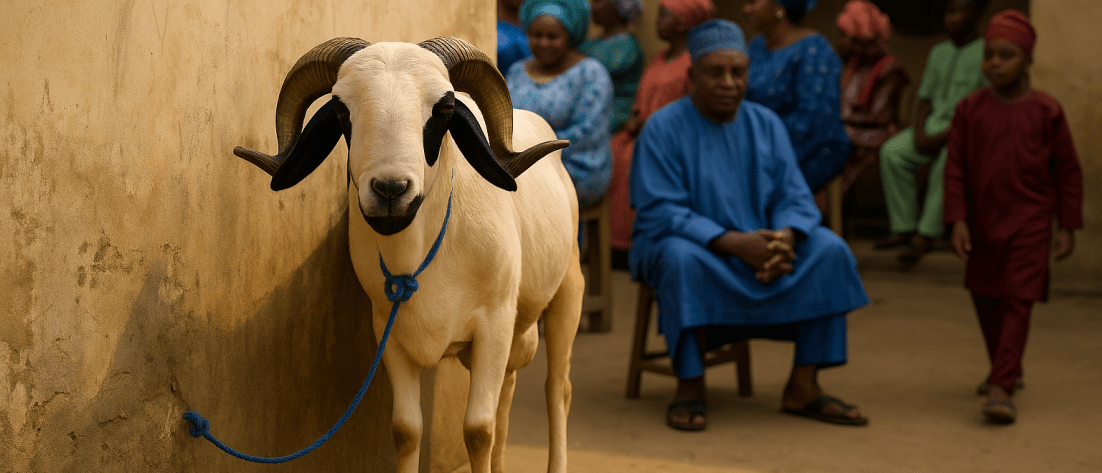
For many Nigerians, Illeya is more than just a religious event, it’s a season of reunion, tradition, and joyful reconnection. The streets buzz with excitement as families prepare for the celebration. Tailors are fully booked. Rams become a common sight. Markets overflow with foodstuff and new clothes. Children eagerly await new outfits and festive meals. There’s a unique warmth in the air, one that’s both spiritual and cultural.
Illeya: Where Faith Meets Culture
What makes Illeya so distinct in Nigeria is the fusion of Islamic tradition with Nigerian cultural expression.
In Yoruba communities, Eid prayers are followed by visits to elders, feasting, music, and dance. Traditional greetings like “E ku Odun,” “E ku Isemi,” and “Barka da Sallah” are exchanged with cheer. While the prayers and sacrifice are religious rituals, the surrounding atmosphere feels deeply festive and communal, sometimes similar to how Christmas is celebrated in Christian homes.
Even non-Muslims in Nigeria recognize and celebrate the essence of Illeya, sharing meals, visiting friends, or simply enjoying the holiday’s warm energy. It’s not uncommon to hear someone say: “I’m traveling home for Illeya,” even if they’re not Muslim. A testament to how embedded the event is in Nigerian cultural life.
Language, Identity, and Localization
Why do we call it Illeya instead of Eid al-Adha? The answer lies in Nigeria’s powerful habit of localizing global experiences to reflect its many languages and identities. Just as Eid al-Fitr is often referred to as “Small Sallah,” Eid al-Adha becomes “Big Sallah” or Illeya with each name telling a story of how people relate to their faith through culture, memory, and community.
In the north, you’ll hear “Barka da Sallah” in Hausa. In the west, it’s “E ku Odun” in Yoruba. In the south, you might hear the English phrase “Happy Sallah!”. These variations don’t dilute the meaning, they enrich it.
A Celebration With Nigerian Flavor
Eid al-Adha is a sacred time for Muslims globally, but in Nigeria, Illeya is also a cultural heartbeat. It’s the music of oriki chants, the scent of smoky grilled ram, the rustle of freshly sewn agbadas and iro-and-bubas, the smiles on the faces of children receiving their Sallah money, and the familiar joy of seeing your entire family under one roof.
So when Nigerians say “Illeya,” they’re not just referring to the event, they’re calling home.
In Summary…
Whether you know it as Eid al-Adha, Id el Kabir, or Illeya, the spirit is the same: faith, sacrifice, gratitude, and community.
This season, as Muslims celebrate around the world, we say:
E ku Illeya o! May your celebrations be blessed, joyful, and deeply meaningful.
Tell us in the comments! How do you celebrate Illeya in your home or community?