In the wake of P. Diddy’s recent legal troubles, where the hip hop mogul faces serious charges, comedian Faizon Love took to Twitter to share his thoughts, provocatively asking, “When has being nasty been a federal crime?” But what really piqued curiosity was his reference to an infamous case from over a century ago—one involving the legendary boxer Jack Johnson. Love’s tweet recalled how Johnson, a Black man in the early 1900s, was arrested and convicted under a now infamous law for the crime of crossing state lines with a white woman—his wife.
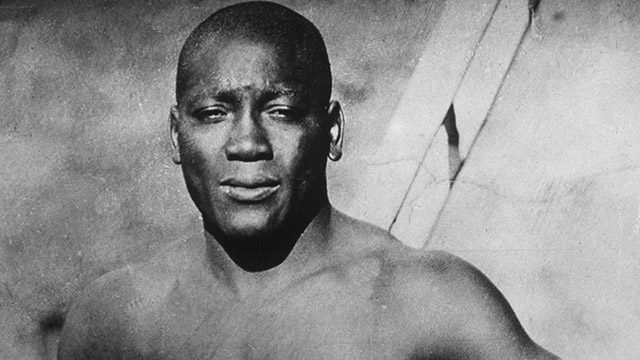
The case of Jack Johnson, the first African-American Heavyweight Champion of the World, is more than just a sports tale; it’s a symbol of how America has historically wielded the legal system to punish Black men for their defiance and success. Johnson’s life, much like Diddy’s current controversy, highlights how public figures, especially Black men, often face legal battles that go far beyond the crimes they’re accused of. In Johnson’s case, his success in the ring—and his personal life—became a battleground for America’s racial anxieties.
Just as the conversation around Diddy’s charges sparks debates about power, privilege, and race, Johnson’s story serves as a powerful reminder of how America has long tried to control and punish those who defy its racial and social expectations. Let’s take a closer look at the rise and fall of Jack Johnson, a man whose victories in the ring and personal life forced America to confront its darkest insecurities.
—————
Black In History: Jack Authur Johnson
Jack Johnson, the first African-American Heavyweight Champion of the World, stands as a towering figure in both sports history and the broader narrative of Black struggle and resistance in America. His journey, marked by triumphs in the boxing ring and fierce battles against the racial injustices of early 20th-century America, symbolizes a pivotal moment in the history of Black resistance, self-determination, and defiance.
The 2005 biographical documentary by filmmaker Ken Burns, based on the 2004 nonfiction book of the same name by Geoffrey C. Ward – Unforgivable Blackness: The Rise and Fall of Jack Johnson, reintroduces the world to this monumental figure. Through a rich tapestry of archival footage, photographs, and expert commentary from figures like Stanley Crouch, Bert Sugar, and James Earl Jones, the film examines not just Johnson’s career but his impact on America’s racial landscape.
Early Life: Boxing in Jim Crow America
Born in 1878 in Galveston, Texas, Johnson came of age in the heart of the segregated South, at a time when the oppressive laws of Jim Crow dictated nearly every aspect of African-American life. Yet, Johnson was no ordinary man, nor was he content to live within the narrow confines of what society expected of Black men. He began boxing in his teens, when the sport was still illegal in many states and deeply entrenched in racial discrimination. While Black boxers were allowed to compete for various titles, one prize remained inaccessible: the title of Heavyweight Champion of the World, a crown that white society considered its exclusive domain.
Despite facing this racial barrier, Johnson displayed a relentless determination. He earned a reputation by defeating both Black and white opponents with apparent ease, but it would take 14 long years for him to finally get his shot at the world title. His story is a classic example of the Black fight for recognition and equality—a fight not just against opponents in the ring, but against a society bent on keeping Black people in subservient roles. Johnson’s struggle for a chance to compete for the highest honor in boxing reflected the broader fight African Americans waged for dignity, economic opportunity, and freedom in a country that denied them basic rights.
Breaking the Barrier: Johnson’s Historic Title Win
In 1908, after years of being denied a chance to fight for the heavyweight title by reigning champion James J. Jeffries, Johnson finally got his opportunity. The new champion, Tommy Burns, agreed to fight Johnson in Australia, lured by the then-unprecedented sum of $30,000. The bout ended in the 14th round when Johnson, having dominated Burns from the outset, was declared the victor. With that victory, Jack Johnson became the first African-American Heavyweight Champion of the World.
This moment of triumph, however, was met not with universal celebration but with anxiety and outrage among many white Americans. As Johnson biographer Randy Roberts explains in the documentary, “The press reacted as if Armageddon had arrived.” White society feared that Johnson’s victory marked the beginning of the unraveling of racial hierarchies in America. The search began immediately for a “Great White Hope”—a white boxer who could reclaim the heavyweight title and restore the racial order.
The “Battle of the Century” and Its Fallout
That hope came in the form of James J. Jeffries, the former champion who had retired undefeated and had avoided facing Johnson. Jeffries came out of retirement in 1910 to challenge Johnson, with the fight hyped as the “Battle of the Century.” The stakes went far beyond boxing; for white America, it was a contest to restore racial supremacy. For Black America, Johnson’s fight represented a rare opportunity to assert dignity and pride in a society that systematically denied it.
On July 4, 1910, in Reno, Nevada, the two men faced off. Johnson emerged victorious, knocking Jeffries out in the 15th round. This victory, however, came at a heavy cost. Across the country, race riots erupted, resulting in the deaths of numerous African Americans. Newspapers warned the Black community not to become too proud of Johnson’s victory, and Congress soon passed a law banning the interstate transportation of fight films, fearing that images of Johnson defeating white opponents would inflame racial tensions further.
Defiance Beyond the Ring: Johnson and Interracial Relationships
Perhaps even more infuriating to white America than Johnson’s boxing dominance was his personal life. He openly defied racial norms by dating and marrying white women, a direct challenge to one of the most deeply held taboos of the time. His relationships with white women—first with Hattie McClay, then with Belle Schreiber and later with his wives Etta Duryea and Lucille Cameron—were seen as provocations. Johnson’s refusal to conform to societal expectations of Black men, both inside and outside the ring, made him a target of white hostility.
His marriage to Duryea was particularly tragic. Johnson’s fame, combined with his personal demons—he was known to drink heavily—contributed to a tumultuous relationship. Duryea struggled with depression and ultimately committed suicide in 1912. Just months later, Johnson married Lucille Cameron, another white woman, sparking further outrage.
Johnson’s marriages, and his unapologetic refusal to be defined by the racist codes of his era, made him a marked man. In 1913, the U.S. government convicted him of violating the Mann Act, a law ostensibly aimed at curbing prostitution but used in Johnson’s case as a tool of racial persecution. Although the charges against him were widely viewed as a sham, Johnson was convicted, and his former lover Belle Schreiber testified against him. Fearing imprisonment, Johnson fled the country and spent years in exile in Europe.
Legacy and the Continuing Struggle for Freedom
In 1920, Johnson returned to the U.S., surrendered to authorities, and served his sentence. Though his career never fully recovered, his legacy as an athlete and symbol of resistance endures. He fought his last fight in 1938, and in 1946, he died in a car crash after angrily speeding away from a diner that had refused to serve him.
Ken Burns’ documentary Unforgivable Blackness brings to life the complex, contradictory, and ultimately tragic figure of Jack Johnson. His life and career were about far more than just boxing. Johnson’s story is that of a man who forced America to confront its deeply ingrained notions of race, freedom, and equality. His defiance of both white and Black expectations, his victories in the ring, and his refusal to back down in the face of relentless persecution make him a figure of immense historical significance.
As Ken Burns puts it, “Johnson’s story is more than the story of a tremendous athlete. It is the story of a man who forced America to confront its definition of freedom.” Johnson’s life, filled with triumphs and tribulations, mirrors the broader struggle of African Americans to claim their rightful place in a country that has often denied them full citizenship. His legacy continues to resonate, serving as a reminder of the enduring fight for racial justice and equality.