Imagine a world where gold was so abundant that a single ruler’s generosity crashed an entire economy. Picture a queen who led armies, striking fear into the hearts of colonizers. Envision a king whose rule extended across nations, yet his story remains buried under the weight of European-dominated history.
Black monarchs were not just rulers; they were visionaries, warriors, diplomats, and architects of civilizations. Yet, many of their stories have been lost, erased, or overshadowed. Today, we’re bringing them back to life—giving them the recognition they deserve. Their legacies didn’t just shape Africa; they influenced the world.
Let’s take a journey through the reigns of some of the most powerful Black kings and queens in history.
African Monarchs Who Shaped History
Mansa Musa: The Richest Man Who Ever Lived (1312–1337)
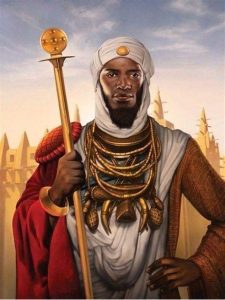
Mansa Musa, the emperor of the Mali Empire, didn’t just rule—he fundamentally altered the global economic landscape.
He wasn’t wasn’t just rich—he was “wealthier-than-Elon-Musk-and-Jeff-Bezos-combined” rich. As the emperor of the Mali Empire in the 14th century, his kingdom sat on nearly half of the world’s known gold supply. But what made Musa legendary wasn’t just his wealth—it was what he did with it.
In 1324, Mansa Musa made a pilgrimage to Mecca (Hajj) that was so extravagant, it altered the course of history. Musa wasn’t just traveling with gold in his treasury; he was bringing it to the Middle East. He took with him a caravan of over 60,000 people, including soldiers, scholars, and slaves, all of whom were laden with gold. Along the journey, Musa would distribute gold freely, giving it away to everyone he met, including people in the cities of Cairo and Medina. The sheer volume of gold he gave away during the journey caused hyperinflation in Egypt, devaluing the metal for years to come.
Beyond this display of wealth, Mansa Musa’s reign transformed Mali into a center of learning and culture. He invited scholars and architects from across the Muslim world to come to Mali, and under his rule, Mali’s capital, Timbuktu, became a center for Islamic learning, housing a university and one of the world’s largest libraries at the time. Musa wasn’t just a wealthy monarch; he was a patron of education, art, and religion, positioning Mali as one of the most influential empires of the medieval period.
The Oba of Benin: Kings Who Built an Artistic and Military Powerhouse (1440–1897)
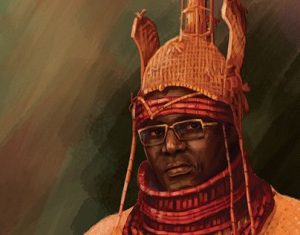
The Kingdom of Benin, located in what is now Edo State, Nigeria, was one of the most sophisticated African civilizations. The dynasty of the Obas, stretching back over a thousand years, built a kingdom that thrived on military strength, artistic excellence, and political ingenuity. These rulers were not only warriors but also master diplomats and patrons of the arts, creating a legacy that continues to influence African history today.
One of the most transformational figures in Benin’s history was Oba Ewuare the Great, who reigned around the mid-15th century (reigned c. 1440–1473). Before his rule, Benin was in chaos, plagued by internal conflicts and weak leadership. Ewuare rose to power in a turbulent time, securing his position through a combination of military conquest and political restructuring. He expanded Benin’s territory far beyond its original borders, bringing surrounding regions under his control and establishing satellite towns ruled by loyal chiefs. His military campaigns ensured that Benin became the dominant power in the region.
Beyond his military successes, Ewuare fundamentally reshaped Benin City, turning it into one of the most sophisticated capitals in Africa. He ordered the construction of a vast system of defensive walls and moats—one of the largest earthworks ever built, stretching over 16,000 kilometers. These walls, constructed entirely by hand, were so advanced that European explorers would later compare Benin City to the most well-organized cities in Europe. Under his rule, Benin’s political structure also evolved. Ewuare centralized power, making the Oba’s authority absolute. The old system of hereditary rule among noble families was abolished, and in its place, Ewuare introduced a more structured government, where chiefs served as advisors but ultimate power rested with the king. He also strengthened religious traditions, establishing the Oba as a divine figure and introducing cultural practices that reinforced the monarchy’s sacred status.
The expansion and consolidation of Benin’s power continued under Oba Esigie (reigned c. 1504–1550), one of the most diplomatically skilled rulers in the kingdom’s history. Esigie was among the first African rulers to speak Portuguese, which gave him a strategic advantage in dealing with European traders. Unlike many African leaders who were forced into exploitative relationships with European merchants, Esigie skillfully controlled trade, ensuring that Benin dictated the terms of its exchanges. This allowed the kingdom to thrive in the international market, trading valuable goods such as ivory, textiles, and the famous Benin pepper.
Esigie’s reign also saw a golden age of art in Benin. The kingdom became renowned for its exquisite bronze sculptures, which were used to document royal events, honor past rulers, and showcase the kingdom’s achievements. These artworks, known today as the Benin Bronzes, were produced using the lost-wax casting technique, a highly sophisticated method that created detailed and lifelike representations of Benin’s rulers, warriors, and spiritual figures. These bronzes became a central part of the kingdom’s identity, reinforcing the power of the monarchy and preserving history in ways that written records could not.
By the late 19th century, however, the Obas of Benin faced an even greater challenge: the expansion of European colonial powers. At the time, Oba Ovonramwen Nogbaisi (reigned 1888–1897) ruled over Benin, and his reign was marked by increasing tension with British forces, who sought to control the kingdom’s lucrative trade routes. Ovonramwen resisted European encroachment by restricting foreign trade and refusing to allow British merchants unrestricted access to Benin’s wealth. This defiance angered the British, who were determined to bring the kingdom under their control.
The breaking point came in 1897, when a group of British officials attempted to enter Benin City without permission, disregarding the kingdom’s long-established protocol for foreign visitors. In response, Benin warriors attacked and killed several of the officials, an event that became known as the Benin Massacre. The British retaliated with overwhelming force, launching what they called the Punitive Expedition. Over 1,200 heavily armed British soldiers invaded Benin City, setting it ablaze, massacring its defenders, and looting thousands of priceless artifacts, including the Benin Bronzes. These bronzes, which had once adorned the royal palace, were stolen and scattered across European museums, where many remain to this day.
Oba Ovonramwen was eventually captured and exiled to Calabar, where he remained until his death in 1914. With his removal, the kingdom lost its independence, becoming part of the British colonial territory in Nigeria. However, the monarchy itself did not disappear. Despite the colonial disruption, the Oba of Benin dynasty survived, and today, the Oba remains one of the most respected traditional rulers in Nigeria. His role is no longer political in the way it once was, but his influence over the Edo people and Nigerian culture remains significant.
The impact of the Benin Obas extends far beyond the history books. Their military strategies, architectural feats, and artistic achievements continue to shape perceptions of African history and heritage. The stolen Benin Bronzes have become a symbol of colonial theft, sparking international debates about the repatriation of African artifacts. In recent years, European museums and governments have begun returning some of these treasures to Nigeria, a small but significant victory in reclaiming the kingdom’s stolen legacy.
Queen Nzinga: The Woman Who Defied Colonization (1624–1663)
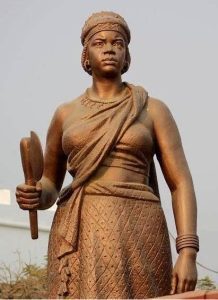
Imagine being a woman in the 1600s, ruling a kingdom, outsmarting European invaders, and earning the title “The Warrior Queen.” That was Queen Nzinga of Ndongo and Matamba (modern-day Angola).
Queen Nzinga, who ruled the kingdoms of Ndongo and Matamba was a master of diplomacy and war. When the Portuguese began encroaching on her kingdom in the early 17th century, they did not expect her to be the formidable force she would become.
Nzinga’s initial strategy was diplomatic. When Portuguese diplomats came to meet her, they expected to find a compliant ruler. Instead, she made a dramatic gesture that would forever mark her as a force to be reckoned with. In one infamous meeting, when the Portuguese refused to offer her a chair during negotiations, Nzinga ordered one of her servants to kneel, using his back as a seat. This was an immediate statement of power—she would not bow to the Portuguese, not even in such a small gesture. This tactic of turning insults into power plays became one of Nzinga’s trademarks.
But Nzinga didn’t stop at symbolism. She formed an alliance with the Dutch, who were also fighting the Portuguese, and used their support to push the Portuguese back. She was not only a brilliant military tactician but also a skilled strategist in leveraging alliances, making her one of the most formidable monarchs of her time. Nzinga’s reign was defined by a constant resistance to European imperialism, and though she didn’t fully expel the Portuguese, her strategic brilliance slowed their expansion and made her a symbol of African resistance.
Did you know that she even converted to Christianity as a tactical move to gain the upper hand?
For over 30 years, Nzinga fought to keep her people free. She was fearless, intelligent, and ahead of her time, proving that women could lead and win.
Shaka Zulu: The Mastermind of Warfare (1816–1828)
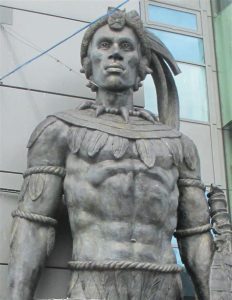
If war had a genius, it was Shaka Zulu. He didn’t just lead the Zulu Kingdom in the early 19th century—he revolutionized military tactics. Shaka’s rise to power was marked by brutal war tactics, but he also implemented military reforms that forever changed the way battles were fought in Southern Africa.
Prior to Shaka, Zulu warriors fought with long, cumbersome spears, and battle strategies were less coordinated. Shaka, however, re-engineered the spear into a much shorter, more efficient weapon known as the iklwa. This was a stabbing spear, designed for close combat, which allowed Zulu warriors to fight more effectively in hand-to-hand combat.
Shaka’s military genius didn’t stop with his weapons. He also introduced the “buffalo horns” formation, a tactical arrangement where soldiers were positioned to encircle and trap the enemy—effectively rendering retreat impossible. This strategy, paired with the training of his soldiers to be relentless, disciplined, and swift, made the Zulu army one of the most feared forces in Africa. Under Shaka’s rule, the Zulu Kingdom expanded from a small tribe to one of the largest and most powerful states in Southern Africa.
But Shaka was not just a warlord—he was a visionary who knew that a unified, disciplined army would need more than just weapons and tactics. He imposed strict disciplinary codes and reorganized the social structure of his people, fostering a sense of collective identity. Shaka Zulu’s reign shaped the destiny of the Zulu Kingdom, and his military innovations are still studied in modern military schools around the world.
Black Monarchs Beyond Africa
Emperor Haile Selassie: The Lion Who Stood Against Fascism (1930–1974)
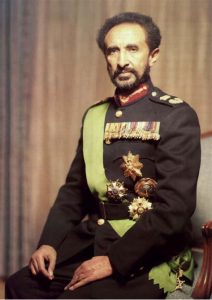
Haile Selassie, the Emperor of Ethiopia, became a symbol of resistance during the 1930s when Italy, under the leadership of Mussolini, attempted to invade Ethiopia. Unlike many African nations, Ethiopia had managed to maintain its independence during the era of European colonization. Selassie’s leadership would prove to be crucial in ensuring that Ethiopia would continue to stand as a beacon of Black sovereignty.
When Mussolini’s forces invaded Ethiopia in 1935, Haile Selassie did not succumb. He turned to the League of Nations for support, delivering one of the most memorable speeches in history, where he condemned the invasion and called for collective action. His speech rallied global support, but the League’s inaction during the invasion highlighted the failures of international diplomacy.
Yet, Haile Selassie didn’t just stop there. After Ethiopia’s eventual defeat, Selassie spent five years in exile. He didn’t forget his people. In 1941, with the help of British forces, he was restored to the throne, and he began modernizing Ethiopia. He introduced education reforms, built infrastructure, and worked tirelessly to maintain the country’s independence in the face of Western imperialism. Haile Selassie’s leadership didn’t just save Ethiopia—it gave rise to a Pan-African movement, where he became a symbol of hope for Black people worldwide.
Ethiopia was the only African nation to successfully resist European colonization, and Selassie’s leadership played a major role in that victory. His fight against fascism inspired the Rastafari movement, where he is still revered today.
King Henri Christophe: From Slave to King (1811–1820)
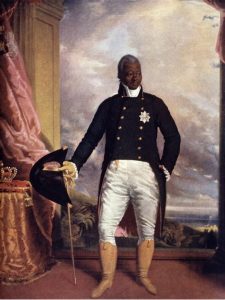
Henri Christophe’s rise from slavery to king is nothing short of extraordinary.
He didn’t just dream of freedom—he fought for it.
Born in 1767 in the Caribbean (what is now Haiti), he was enslaved but later joined the Haitian Revolution in the late 18th century, a war that ultimately freed Haiti from French colonial rule and slavery. Christophe didn’t just settle for freedom—he aspired to lead.
After the revolution, he declared himself King Henri I of the Kingdom of Haiti in 1811, creating a monarchy in a republic born from slavery. His reign was marked by a fierce drive to protect Haiti’s independence. Christophe built the Citadelle Laferrière, a massive fortress atop a mountain, as a symbol of Haitian resistance and as a defensive stronghold in case of French re-invasion. The Citadelle was a monumental feat of engineering, constructed with the labor of former slaves, and it remains one of the most iconic symbols of Haitian independence.
Christophe didn’t just focus on military defense; he also worked to modernize Haiti’s economy. He established a system of industrialization, including sugar mills and ironworks, to make the nation self-sufficient. Christophe’s vision for Haiti was one where the Haitian people could thrive without relying on foreign powers, and while his reign was short, his legacy as a self-made monarch lives on.
Christophe built a kingdom where Black people could thrive without colonial rule.
Contributions and Influence
These monarchs weren’t just figureheads sitting on thrones—they actively shaped their worlds.
– Governance & Leadership: They reformed laws, built cities, and established systems that lasted for centuries.
– Military Strategy: Many were undefeated in battle, proving that Africa and its diaspora had some of the greatest war leaders in history.
– Economic Influence: From Mansa Musa’s gold empire to Haiti’s self-sufficient economy under Christophe, these rulers controlled trade and wealth.
– Cultural & Religious Impact: They spread languages, traditions, and religions that are still alive today.
The Lasting Impact of Black Monarchs
Why do these stories matter? Because history isn’t just about knowing what happened—it’s about understanding who we are.
Black monarchs weren’t just local rulers; they influenced global history. They fought against colonization, built powerful economies, and led their people with strength and wisdom. Their legacies live on in the cultures, traditions, and even resistance movements we see today.
It’s time to rewrite the narrative. Black history isn’t just about struggle—it’s about power, innovation, and leadership.
Conclusion
These kings and queens didn’t wait for history to recognize them—they made history. They ruled with brilliance, fought with courage, and built civilizations that still inspire us today.
The next time someone talks about kings and queens, remind them that the world’s most powerful rulers weren’t just in Europe—they were right here, in Africa and the Black diaspora.
It’s time to remember their names.