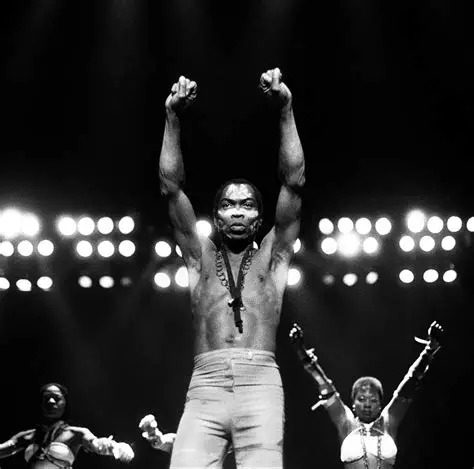
Fela Anikulapo Kuti was never one to keep quiet. With a microphone in hand and fire in his voice, he rattled thrones, exposed corruption, and dragged oppression into the daylight. Decades after his passing, his voice still echoes through the drums and saxophones of his records. But if he were alive today, who would that voice be calling out?
We asked six Nigerians this very question not as a gimmick, but as a deep probe into the conscience of a nation. Their answers were sharp. They cut deep. And more importantly, they pointed to one tragic, undeniable truth: we’ve not only remained in the same cycle, we’ve actually gotten worse.
A Voice That Fought Power, Not Just People
Fela was fearless. He sang of soldiers as zombies blindly following orders, and he gave names, real names, to the institutions and people oppressing Nigerians. He wasn’t just a musician; he was a cultural firebrand, an activist wrapped in rhythm. His songs like Coffin for Head of State, Sorrow, Tears and Blood, and International Thief Thief (ITT) weren’t entertainment, they were resistance.
That resistance made him a target. He was arrested over 200 times, his mother was thrown out of a window by Nigerian soldiers, and his Kalakuta Republic was burnt to the ground. But he never stopped. And maybe, that’s what makes the answers we got all the more haunting.
“He Would Be Appalled”
The first respondent said: “I think he’d be very appalled that we’re taking steps backward instead of forward. He would not only sing about the wicked politicians we have, but also about the citizens who seem to have no limit to agreeing to adjust to suffering.”
This isn’t an exaggeration. Nigeria’s inflation is the worst it has been in decades. Unemployment remains a constant threat. The very problems Fela sang about, government corruption, mismanagement, and exploitation, are still deeply embedded in the system. But it’s not just the government.
The people have also become numb, tired, and even complicit. Survival has become a culture, where resistance is muted by exhaustion, and where apathy is sometimes mistaken for peace.
If He Were Alive, Would Fela Still Fight?
The second response was both shocking and saddening: “Fela might have given up and just relocated somewhere abroad.”
It’s a thought that forces us to reflect, not on Fela’s strength, but on our present-day Nigeria. Is the system so broken that even someone like Fela would throw in the towel? The question isn’t about Fela’s endurance; it’s about how deeply citizens today feel trapped in a society where nothing changes no matter how loud you shout.
The third responder put it plainly: “History is just repeating itself again… We’ve gone back deep into the slavery that people fought and died for. This time, citizens are the ones selling themselves as slaves.”
That statement stings. And it should. It captures what makes today’s Nigeria feel even more tragic because we know better. We’ve heard the warnings in songs, in speeches, in news. We’ve read about these things. And still, we repeat the same cycles.
The Tragic Truth: It’s Not Just the Government
As said by the fourth responder: “If Fela Kutti were alive today, he would continue to talk to our government and people through his music. He would have released songs about Buhari and Tinubu. He would have done a remix of that Zombie song.”
This emphasizes that today’s Nigeria would give Fela even more to sing about, not less. From Buhari to Tinubu, from rigged elections to fuel subsidy removals, from insecurity to impunity, the stage is overcrowded with villains.
But the tragic twist? Fela’s loudest criticisms today wouldn’t stop at Aso Rock. It would reach the streets.
The citizens who normalize hardship. The influencers who glamorize suffering as hustle. The tribalism that makes oppression a competition. The silence that follows injustice.
And because of this, as the fifth responder simply put it: “Nigerians might have hated him more today. Our parents didn’t even see his message then.”
So Who Would Fela Be Singing About?
All of us.
The political elites hoarding power. The average citizen who has given up. The citizen who was willing to sell the future for present gain. The system that makes people question their own sanity.
The final respondent, a political scientist, said: “I have a lot to say… I wish he was alive.” That longing captures what Fela represents: the voice we need, but also the one we’ve silenced.
A Legacy We’re Still Running From
This article isn’t about nostalgia. It’s not a love letter to a myth. It’s a mirror, and maybe that’s what makes it so hard to look at. Because in the end, the tragic truth is not just that things are still bad. It’s that they’ve gotten worse.
Fela sang. He pushed. He fought.
And now, it’s our turn.
Who or what do you think Fela Kuti would be singing about today? Let us know in the comments.