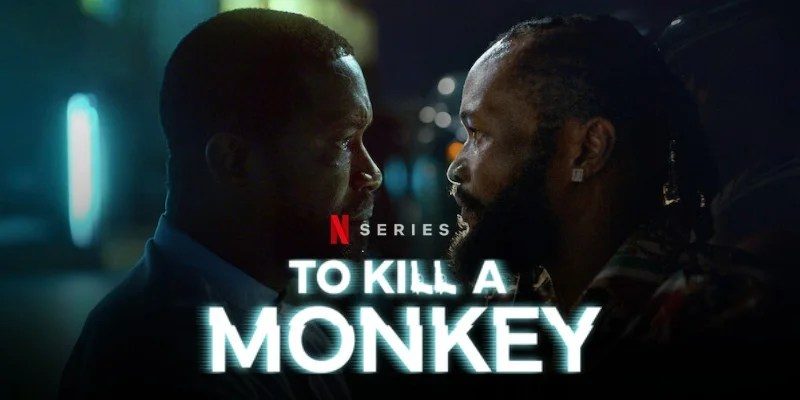
There’s a popular Nigerian saying: “Poverty na bastard.” But watching To Kill a Monkey reminds you of another truth: you can never make a deal with the devil and come out whole.
There’s a point where hunger stops rumbling in the stomach and starts whispering in the mind. A point where the shame of being unable to provide becomes heavier than the hunger itself. That is where To Kill a Monkey begins, in that dangerous place where desperation shakes hands with temptation.
Kemi Adetiba’s latest masterpiece is more than a Nollywood crime thriller, it’s a piercing social mirror, a tale of brotherhood, betrayal, and the dangerous bargains poverty forces people to make. It drags you into the muddy streets of Lagos, sits you in the middle of its chaos, and dares you to decide: If poverty held you by the throat, what would you do to break free?
Released on Netflix in July 2025, this eight-part series brings together some of Nollywood’s finest, including William Benson as Efemini “Efe,” Bucci Franklin as Oboz, Bimbo Akintola as Inspector Mo, Stella Damasus as Nosa, and Chidi Mokeme in a standout supporting role.
From the very first scene, To Kill a Monkey tells you it’s going to be a ride. The opening/theme song? Fire! The kind of track that makes you sit up and pay attention even before the first line of dialogue drops. Throughout the series, every song choice is a chef’s kiss; perfectly placed, perfectly timed, heightening each scene’s emotion.
The Acting: Bucci Franklin, Take a Bow

Every actor pulled their weight, but Bucci Franklin didn’t just play Oboz, he became Oboz! The menace in his tone, the calculated stares, the body language that spoke louder than words… It was a masterclass. Oboz wasn’t just a character; he was a force of nature. William Benson’s Efe was equally compelling, delivering the quiet desperation and moral conflict of a man torn between survival and his soul.
Poverty, Money, and the Devil’s Bargain
At its core, To Kill a Monkey is about the suffocating grip of poverty. It shows how hunger, humiliation, and hopelessness can push a person to abandon their morals, break the law, and betray the very people they love.
Money, in this story, is both salvation and curse. In the world Adetiba paints, respect and power are tied directly to wealth. Without it, you’re nothing, a “nobody,” and open to insults like those Efe endured from Nosa’s mother. But with it comes a new danger: greed. Because no amount of money is ever enough.
When Efe accepts Oboz’s offer of a “job”, complete with a house, a car, and promises of quick escape, his wife voices her concerns. He assures her they’ll be untouched by danger. But in the world of shady deals, no one is untouched. Everyone you love becomes a target. And as the story unfolds, Efe learns the devil doesn’t give without taking something bigger in return.
The Brotherhood and the Betrayal
The most heart-wrenching moment is when Efe, desperate to save his family, offers up the blood of his brother Oboz. It’s the ultimate betrayal, but the cruel irony is that it buys him nothing. Because you cannot outsmart the devil. The devil’s game only ends when you’re destroyed.
In the end, Efe doesn’t just lose his brother, he loses himself, he loses his family, he loses everything. The story reminds us that in the world of crime, it’s always eye for an eye, tooth for a tooth, gbas for gbos. Peace has no seat at that table.
Life, Hypocrisy, and Hard Truths

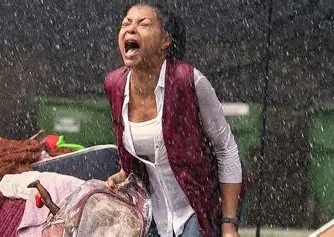
Nosa, Efe’s wife, is a complex study in loyalty and resentment. She agreed to his shady hustle when it suited her, then turned around to blame him for their misfortunes. Her mother, Mama Nosa, was no better, quick to insult him in poverty, yet suddenly protective of the marriage when wealth arrived. This hypocrisy is one of the film’s quiet but biting commentaries on society’s shifting morals in the presence of money.
And beyond personal relationships, the law is an unflinching character in itself; it doesn’t care about your hardships. You pay for your actions, regardless of the reasons behind them.
Finally…
To Kill a Monkey is “perfect” in its own right: a perfect blend of stellar performances, a haunting soundtrack, and a storyline that refuses to let you watch passively. It makes you think about life, choices, and the fine line between survival and destruction.
Kemi Adetiba has once again created magic, proving she’s one of the most important voices in Nollywood storytelling today!
Watch it (if you haven’t). Think about it. And pray life never pushes you to make a deal with the devil.
What did you think about To Kill a Monkey? Let’s talk in the comments.